Showing posts with label Botany Bay. Show all posts

Wednesday, 13 July 2022

Digging, shovelling, sowing and growing


Growing gardens, stories and wonder
Botany Bay project, summer 2022


We are

Diggers and shovellers,

Weeders and waterers.

We are strawberry-savers

And raspberry-tasters.

(Medlock Primary School, Manchester)


Hurst Drive, 1
We had started with plans. There were discussions, visits to museums, to gardens, visits from storytellers, gardeners, cultural experts. Our new gardeners sowed ideas, watered imaginations, got carried away. Eventually there was earth and digging and grubby hands and seeds in pots


There were successes. There have been disasters. There have been slow starts and reluctant germinations, but gradually our Botany Bay gardens are taking shape. 


We’re proud of our team

And all our hard work

We’re proud that we can deal with our problems.

We want to start eating the food that we grow,

And we want to grow to help each other,

To help our school, to help the animals that visit us.

(Oswald Road Primary School, Manchester)


“BOTANY BAY is a Participation and Learning project, supported by the National Lottery Heritage Fund.  The project makes use of the migration histories of plants and crops, and their Indigenous cultural heritage in relation to ecology and reciprocity, as a way to stimulate young people to explore new ways of living.  The Covid-19 pandemic and the climate crisis have made a re-assessment and recalibration of human relationships to the non-human an urgent necessity, and young people have to be at the heart of this process, forging a future for humanity and the planet.” (Introduction from the ORIGINS website)


I was one of those early visitors and this summer returned to 4 of our gardening schools. I was shown round vegetable beds, introduced to sunflowers, had a club's organic principles explained to me, sampled raspberries and commiserated with one group who had seen all their work trampled by other children at their school – not maliciously, just people who did not realise that these were seed beds and not just bare patches of earth. 

Hurst Drive sunflower

We have a garden waiting

Like an idea in the dark of the earth,

Children waiting to dig,

Seeds waiting to grow,

Dreams waiting to flower

Into a garden of wonders. 


Our garden will be a bright garden,

And have a beautiful blossom tree

And there will be strawberries…

Juicy strawberries,

The juiciest strawberries in all of London!

And when our strawberries are ripe and ready 

We’ll pick them and wash them and eat them.

(Cavendish Primary School, London)


Part of my role within the wider Botany Bay project is to help the Gardening groups build the stories of their gardens. On this trip we were looking at words: harvesting, tasting, enjoying words like strawberries. In the autumn or winter, we are planning on creating Garden Ceremonies – or Sharings or Events (we’re not quite sure what!) and the collective poems that are growing out of these sessions will feed into those occasions….


Oswald Road gardeners are also poets and artists


For now, I’d like to share some of our words and some pictures of progress with a round of applause for all our gardeners (schools are listed below!) and with many thanks to the teachers, support staff, volunteers, and simply everyone who has been helping these gardens grow!


In our garden

Chamomile beams a sunny smile
And garden queens grow ivy-white crowns.

The massive hearts of squash leaves

Shade their sisters from the sun

While sunflowers grow as bright as the sun and stars

And the forget-me-nots never forget us.

Here rosemary grows with frosted leaves

And chives are spicy although garlic is best.


We are proud of this garden and

How quickly it grows, and

How richly it flowers, and

How friendly it becomes, and

How delicious it will be.

We are proud of our garden and all it holds,

We are proud of our gardeners and all their hard work.


In our garden,

Everyone deserves a crown

We are proud of our garden. 

It deserves to be treated with respect and love.

(Hurst Drive Primary School, Waltham Cross)


Woven into all this digging and sowing is an awareness that when we plant a garden we are also planting stories and connecting to cultures - both our own and cultures and communities in far away places. We hope  that if we listen to the stories that belong to those people and their plants it might help us appreciate our gardens more deeply and grow those gardens more effectively. So we know we are growing stories as we grow gardens: old stories, ancient stories and brand new ones of our own.


In our garden,

We have snail-rails

And parties for bees,

Logs for woodlice

And tree-stumps for beetles...


In our garden,

We are growing a team,

Who work together,

Who help each other,

Who support each other,

Who care for this garden.

(Medlock Primary School)


With many thanks to the Botany Bay team and to our schools and their gardening teams

Cavendish Primary School, Chiswick, London

Chiswick High School, London

Hurst Drive Primary School, Waltham Cross, Herts

Medlock Primary School, Manchester


Friday, 25 February 2022

Seeds of wonder - the Botany Bay project


Planting seeds of wonder

Botany Bay Project 2022

we don't need to think in straight lines

When we plant a garden, we are planting stories. And when we know those stories, when we understand them, they can help our garden grow and enrich our lives in more ways than simply giving us food to eat.


We were telling stories. From the Three Sisters of North America to the Blue Corn Maiden and the sharpness of Grandmother’s Tongue from the deserts of Arizona. There were the round curving wonders of mango reappearing in “paisley pattern” fabrics. There were the eyes of a Polynesian eel looking out of a coconut


“BOTANY BAY is a Participation and Learning project, supported by the National Lottery Heritage Fund.  The project makes use of the migration histories of plants and crops, and their Indigenous cultural heritage in relation to ecology and reciprocity, as a way to stimulate young people to explore new ways of living.  The Covid-19 pandemic and the climate crisis have made a re-assessment and recalibration of human relationships to the non-human an urgent necessity, and young people have to be at the heart of this process, forging a future for humanity and the planet.” Introduction from the Botany Bay page


Find out more: Botany Bay

There are other workshops invovled with visits from Museum teams, trips to the Garden Museum: check in at the Botany Bay link aboe for a fuller picture of the whole flwoering of this project!


As Creeping Toad, I have come into Botany Bay as a storyteller and creator of celebrations. My first sessions with the gardening schools was a mixture of telling stories, listening to ideas, provoking discussions and being a supportive voice around wild imaginings. We told stories. We scribbled, thought, scribbled again, pouring collective garden ideas on sheets….could we grow strawberries? Bananas? Dragonfruit? Do kiwi fruit grow on trees? At this stage in the planting of our school gardens, the gardeners were shaping ideas: what? How? Where? When? The control of their garden is being repeatedly returned to these young gardeners. The project is pushing those gardening groups to do the research (will bananas ripen in a UK summer?). The challenge is as much about understanding and appreciating changing worlds as actually getting a rich crop. So we talked about what might grow (with rewarding detours into climate change and young people’s awareness of hotter summers and possible consequences (back to bananas, but how do we find out if we can grow vanilla?). Those first traditional stories came back: can we plant in Three Sisters patterns (not always successful in damp UK climes)? Raising more questions than answers just now but that is good.

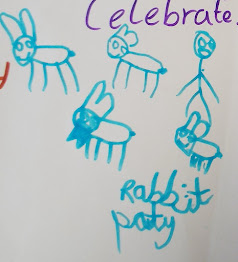
Rabbit Parties? 

We were thinking of our gardens as more than simply “places where we plant things”. We talked about the experience a garden could offer (big stones for sitting on, as happy as a cat on all fours, mesmerising were all suggestions), what we could do with these plants we were growing, what else we should include (trampolines, a hot-tub, but also secret bee hives,  bug-hotels and ponds). Conversations grew into ways of sharing, celebrating and appreciating our gardens: recognising that the plants we are growing and the animals associated with them are living acts of generosity for us and that we should find ways of thanking the world around us. Possible celebrations escalated:

            My parents do Caribbean street food – can someone come and teach us how to cook our special foods?

            Crumble days (almost universally approved of – apple crumble, plum, blueberry who know what else we could crumble with!

            Can we produce our own recipe book

            Strawberry picnics

Milk shake day and an ice cream festival with flavours grown in the garden

A rice festival

A corn feast

          Pie day: with all the pie fillings grown in our garden

          Can we grow dyes and make tie-dyed T-shirts to wear or sell?

          Can we have a market stall?


“What can we do with the richness of our gardens” continued to spiral into celebrations

            The Great Chiswick/Chorlton/Waltham/Medlock Bake Off (we’d be the judges)

            A video game day – powered by pedals or solar panels

            A music day: could we write tunes about our plants and maybe make instruments….and of course could we write songs to celebrate gardens


At other times, ideas turned down more sinister  (or just plain strange)routes. Could we grow a boiled egg tree?  If we planted a pupil, could we grow a Dead Kids Tree with shrunken heads instead of apples…we all decided “maybe not”. Liking the grisly but powerful image, suddenly we were wondering about designing graphic novels about life and nightmares in a garden


By the end of 4 days of workshops in our 5 different schools, my head was spinning


As the Botany Bay gardens start growing, my role will be to drop in and help develop ideas about celebration and appreciation. The working questions are “how do we share our gardens” and “how do we thank our plants” and “how do we tell our stories”. Listening to stories from the deserts of central America or tales of melons from southern Africa is exciting but we need to find the connection that roots chilis or melons in our gardens in urban England and in our communities.


We are setting out to grow gardens but also to grow our own new stories of richness and wonder and feasts that feed body, heart and soul all at the same time.


With many thanks to our gardening schools: for their enthusiasm and hospitality - and their bravery in setting out to plant wild, growing gardens rich with stories

Cavendish Primary School, Chiswick

Chiswick High School

Hurst Drive Primary School, Waltham Cross

Medlock Primary School, Manchester

Oswald Rd Primary School, Manchester


Botany Bay is a project produced by Border Crossings' ORIGINS Festival


Photos: all image c/o G MacLellan: 

not all schools are represented here - more photos will be added!