Friday, 25 February 2022

Seeds of wonder - the Botany Bay project


Planting seeds of wonder

Botany Bay Project 2022

we don't need to think in straight lines

When we plant a garden, we are planting stories. And when we know those stories, when we understand them, they can help our garden grow and enrich our lives in more ways than simply giving us food to eat.


We were telling stories. From the Three Sisters of North America to the Blue Corn Maiden and the sharpness of Grandmother’s Tongue from the deserts of Arizona. There were the round curving wonders of mango reappearing in “paisley pattern” fabrics. There were the eyes of a Polynesian eel looking out of a coconut


“BOTANY BAY is a Participation and Learning project, supported by the National Lottery Heritage Fund.  The project makes use of the migration histories of plants and crops, and their Indigenous cultural heritage in relation to ecology and reciprocity, as a way to stimulate young people to explore new ways of living.  The Covid-19 pandemic and the climate crisis have made a re-assessment and recalibration of human relationships to the non-human an urgent necessity, and young people have to be at the heart of this process, forging a future for humanity and the planet.” Introduction from the Botany Bay page


Find out more: Botany Bay

There are other workshops invovled with visits from Museum teams, trips to the Garden Museum: check in at the Botany Bay link aboe for a fuller picture of the whole flwoering of this project!


As Creeping Toad, I have come into Botany Bay as a storyteller and creator of celebrations. My first sessions with the gardening schools was a mixture of telling stories, listening to ideas, provoking discussions and being a supportive voice around wild imaginings. We told stories. We scribbled, thought, scribbled again, pouring collective garden ideas on sheets….could we grow strawberries? Bananas? Dragonfruit? Do kiwi fruit grow on trees? At this stage in the planting of our school gardens, the gardeners were shaping ideas: what? How? Where? When? The control of their garden is being repeatedly returned to these young gardeners. The project is pushing those gardening groups to do the research (will bananas ripen in a UK summer?). The challenge is as much about understanding and appreciating changing worlds as actually getting a rich crop. So we talked about what might grow (with rewarding detours into climate change and young people’s awareness of hotter summers and possible consequences (back to bananas, but how do we find out if we can grow vanilla?). Those first traditional stories came back: can we plant in Three Sisters patterns (not always successful in damp UK climes)? Raising more questions than answers just now but that is good.
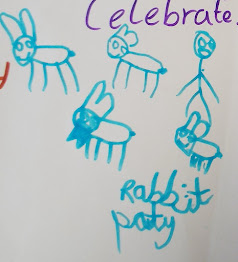
Rabbit Parties? 

We were thinking of our gardens as more than simply “places where we plant things”. We talked about the experience a garden could offer (big stones for sitting on, as happy as a cat on all fours, mesmerising were all suggestions), what we could do with these plants we were growing, what else we should include (trampolines, a hot-tub, but also secret bee hives,  bug-hotels and ponds). Conversations grew into ways of sharing, celebrating and appreciating our gardens: recognising that the plants we are growing and the animals associated with them are living acts of generosity for us and that we should find ways of thanking the world around us. Possible celebrations escalated:

            My parents do Caribbean street food – can someone come and teach us how to cook our special foods?

            Crumble days (almost universally approved of – apple crumble, plum, blueberry who know what else we could crumble with!

            Can we produce our own recipe book

            Strawberry picnics

Milk shake day and an ice cream festival with flavours grown in the garden

A rice festival

A corn feast

          Pie day: with all the pie fillings grown in our garden

          Can we grow dyes and make tie-dyed T-shirts to wear or sell?

          Can we have a market stall?


“What can we do with the richness of our gardens” continued to spiral into celebrations

            The Great Chiswick/Chorlton/Waltham/Medlock Bake Off (we’d be the judges)

            A video game day – powered by pedals or solar panels

            A music day: could we write tunes about our plants and maybe make instruments….and of course could we write songs to celebrate gardens


At other times, ideas turned down more sinister  (or just plain strange)routes. Could we grow a boiled egg tree?  If we planted a pupil, could we grow a Dead Kids Tree with shrunken heads instead of apples…we all decided “maybe not”. Liking the grisly but powerful image, suddenly we were wondering about designing graphic novels about life and nightmares in a garden


By the end of 4 days of workshops in our 5 different schools, my head was spinning


As the Botany Bay gardens start growing, my role will be to drop in and help develop ideas about celebration and appreciation. The working questions are “how do we share our gardens” and “how do we thank our plants” and “how do we tell our stories”. Listening to stories from the deserts of central America or tales of melons from southern Africa is exciting but we need to find the connection that roots chilis or melons in our gardens in urban England and in our communities.


We are setting out to grow gardens but also to grow our own new stories of richness and wonder and feasts that feed body, heart and soul all at the same time.


With many thanks to our gardening schools: for their enthusiasm and hospitality - and their bravery in setting out to plant wild, growing gardens rich with stories

Cavendish Primary School, Chiswick

Chiswick High School

Hurst Drive Primary School, Waltham Cross

Medlock Primary School, Manchester

Oswald Rd Primary School, Manchester


Botany Bay is a project produced by Border Crossings' ORIGINS Festival


Photos: all image c/o G MacLellan: 

not all schools are represented here - more photos will be added!


Sunday, 20 February 2022

Barefoot at Kew


Orchids, 2022 (see end of post)

Barefoot on the grass of Kew


My relationship with Kew Gardens, or the Royal Botanic Gardens at Kew, is almost as old as I am. I have a toddler’s memories of tuppeny turnstiles (or maybe it was a penny?) at the entrance and the excitement of the rattle and clunk of the entry and a world that opened into endless possibilities with an adult trying to restrain both body and imagination of a small person sure that this time the Stone Lions by The Pond would wake up... 


Landmarks chart that relationship through years….


waiting for the carp to rise in the Palm House Pool. “Feeding the ducks” took on a whole new perspective at Kew: there were these huge, half-hidden creatures that made the water swirl, that gulped and splashed and were never quite visible. A swirl of the murky waters…could have been anything!


being amazed by the fish in the waterlily house, guppies warming in the warm shallows while “escaped” terrapins hung in the water or lounged on the edges. Tropical wonders while a huge
Victoria amazonia uncurled in the middle of the pool

having a safe teenage crush on the statue of Hercules in the Palm House Pool: what was there not to love? All muscle and curves and no possible embarrassing conversations and mistaken looks


meeting my first Ginkgo tree as it fluttered delicate golden leaves into an autumn breeze

 reading Keith Claire’s The Tree Wakers, a story of strange, botanic delight set in Kew. Absolutely captivating and inspiring….


watching a golden pheasant strutting, glowing, across the lawns in front of the Pagoda


the refuge that the then new Princess of Wales conservatory offered a young man missing the warmth and vibrancy of African flora


New zealand koru unfurling

  I still return to the P of W after all these years, pausing on benches tucked into odd leafy corners to be still and appreciate warmth and humidity and a world experienced in shades of green. I finished my first reading of Keri Hulme’s The Bone People there. The fern rooms with their uncurling tree fern kore echoed the imagery and setting and richness of the book


then, 20 years ago, 
there were cheerful summer sessions delivering workshops for the Friends of Kew, making processions of giant fish people or printing leaf patterns or decorating tiny treasure chests to fill with treasures combed from walks through the gardens


and more recently, being captivated by a set of woven-willow characters cavorting across a lawn. “How wonderful! They’re just the sort of things I would expect my friend Woody to make…..O. They were made by Woody!” See more of Woody Fox's work here


In a life of self-employed uncertainty, the Gardens have offered a constant, as a ripple of enchantment and wonder through years of never being sure what might happen next, what work might, or might not, come


And another repeat: walking the paths of the Princess of Wales Conservatory barefoot….walking all of the gardens barefoot, relishing in the textures of grass, the warmth of tarmac, rough stone, pine needles. 


A rich connection.


The wind rattles our twigs into voices,

Into words no-one else knows,

Songs of willow and water and wanting

Filling the night with a dry, rustling anticipation.

from Treelings: my poem inspired 

by Woody's dancing willow-folk


Images in this post:

all photos are by Gordon MacLellan, except

Treelings c/o Woody Fox 

and the cover of Tree Wakers by Claire Andrews 

(follow link in text for publication details)


Orchids at Kew: the annual orchid festival in full swing in the Princess of Wales Conservatory just now: a spectacular plunge into 

the richness of a Costa Rican rainforest.

Find out more


Thursday, 10 February 2022

A dream from the seed's wings


Treasuring Trees: celebrating Derbyshire's Trees
Buxton Museum and Art Gallery•
19th february - 8th june 2022 

 
Birch tree,

Will you gift me a dream,

From the seed’s wings,

...From the mere’s mirror?

Three of us have worked together to gather this exhibition. While Sarah and Valerie are visual artist creating paintings, drawings and photographs, I’m a storyteller, a puppeteer and a poet as much as anything else so inspiration for me shapes itself into characters and words 


Birch Boggarts waiting for hair...
I like birch trees: their dusty elegance, their endurance, the simple moonlit beauty of their bark all intrigue me. There are stories bound up with birch trees.In the Highlands of Scotland, birch woods are haunted by “The One With the White Hand” who drifts through the trees like mist. If she (?possibly? people don’t usually enter close conversation to get a real sense of gender!) sees you, she may pursue you….If she catches you, a touch from one of her long slender fingers on your forehead will inspire you, make a bard of you. If that finger taps your heart….you will die


Birch trees for me went in a lumpier direction and I found birch boggarts waiting to speak… A set of birch tree boggart puppets are taking shape for Treasuring Trees. With them came words, a set of late night, just before sleep, snippets whispered into my drowsy mind by the boggarts that live among the birch roots. These are pages from the Birch Boggarts’ Spellbook. 


A time ago, a while ago, the life of a birch ago, a birch wood was being felled and the boggarts of that wood knew they would die with their trees, so they gifted their Spellbook to a human, giving him permission to share its pages.


In the Birch Box at Treasuring Trees some of those pages will accompany “my” Birch Root Boggarts….I have been enjoying these lines: they hold mix of danger and beauty that marks most encounters with the peoples of Faerie:  

Birch is the breath

Of inspiration through the wood 

(from: “To be sung when brewing birch-bud tea”)

 
And then:

Our curse lies in a cold wind

And a shadow behind the door.


At some point during the exhibition, all the available pages of the Spellbook will be posted on this blog as a booklet to download for anyone who needs a bit of Birch Leaf Wine in words


*19th February – 8th June 2022 at Buxton Museum and Art Gallery. Entrance is free so please feel inspired to buy some postcards or a print in the shop!


Treasuring Trees: celebrating Derbyshire's trees 

find out more: Treasuring Trees


Sunday, 23 January 2022

Treasuring Derbyshire's Trees


Treasuring Trees

celebrating Derbyshire’s trees
Exhibition at Buxton Museum & Art Gallery
19th February – 8th June 2022


As the world changes, our trees are under threat. With the effects of rising temperatures, forest clearance and diseases like Ash Dieback, we are losing trees all the time. In this year when, to mark the Queen’s Platinum Jubilee, there are plans to plant 1 million trees, three Derbyshire artists invite people to look at trees more deeply. We hope this reflection will foster personal wellbeing and involve people in biodiversity and climate change projects.

“With this exhibition, ‘Treasuring Trees’, we aim to encourage conversations about trees, to build a deeper understanding of the relationships between trees, landscapes and ourselves. We’d like people to celebrate Derbyshire’s trees”.

"Spirit of the Hawthorns", Valerie Dalling

From tree-crowned Lows and Tors, to ravine woodlands, to nature reclaimed quarries, to green spaces in towns, trees grow into our lives across the centuries. As artists, Sarah, Valerie and I have drawn inspiration from history, landscapes and communities about their local trees. Their work creates a reminder of the presence of those trees in our lives and a warning of what we might lose.


The three artists have worked individually, together and with the community to create this celebration of Derbyshire’s trees.

Sarah EA Parkin is a watercolour painter depicting Derbyshire Dales landscapes with trees and highlighting areas on the point of change.

Gordon MacLellan is a poet, storyteller and puppeteer. Drawing together personal work and community projects, Gordon’s work reflects emotional responses to Ash Dieback and the changing woodland landscape.

Valerie Dalling is a Peak District photographer who has looked at birch trees in the National Park. Focusing on community health and wellbeing, her leisurely reflective approach aims to encourage a deeper appreciation of the landscape.

(links are to our instagram pages - other handles are below)


Puppets taking shape on a Toadtable
My work

Creeping Toad is adding puppets and poems to the proceedings, with a selection ranging from 4metre tall tree people to small oak-root goblins and birch boggarts. From community poems with the tall trees to pages from the Birch Boggart Spellbook there will be all sorts of Toad-work to (hopefully) entertain or offend


Community wall

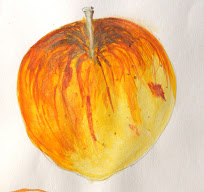
During our preparation for Treasuring Trees, all three artists reached out to the community in different ways. This work has resulted in a community wall of paintings, poems, photographs and prints from people reaching from Leek to Sheffield, from Derby to Buxton. We're not going to start displaying those images here but here is an apple aperitif from Mary at Borderland Voices


Collective work

As well as our own work and the community participation, the three of us visited the fabulous ancient hawthorns at Hay Cop in the Derbyshire Dales National Nature Reserve. There is one section of the exhibition that has grown from those visits, all three of us responding in our own ways to these venerable trees


EVENTS AND VISITING THE EXHIBITION


Treasuring Trees is at Buxton Museum and Art Gallery,

Terrace Rd, Buxton, SK17 6DA

Tel: 01629 533540

Dates; 19th February - 8th June 2022

Meet the artists event 26th March,  2 – 4pm at the Museum

Keep an eye on our social media:

Instagram
  • @seaparkin_artist & @celebratingDerbyshireTrees
  • @valerieDalling & @peakTrees
  • @creepingtoad
Facebook
  • @SarahEAParkin-DerbyshireLandscapePaintings
  • @ValerieDallingPhotography
  • @creepingtoad
Twitter
  • @TreasuringTrees & @seaparkin
  • @valerieDalling & @peakTrees
  • @creepingToad
Images in this post
  • exhibition composites c/o Sarah Parkin
  • "Spirit of the Hawthorns" c/o Valerie Dalling
  • puppets, hawthorns and postcards: c/o Gordon Maclellan
  • Apple by Mary c/o Richard Egan
many thanks to Buxton Museum and Art Gallery for their hospitality and endless patience with us!


Creeping Toad postcards will be on sale


Monday, 17 January 2022

Shining Wonders, free event, 5th February


Shining Wonders from the Museum
Buxton Museum and Art Gallery
February 5th 2022

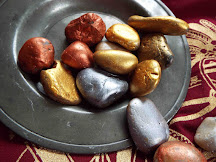
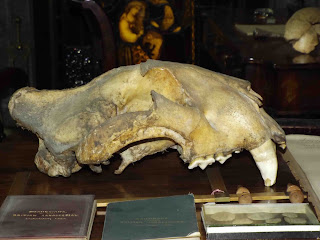
At this quiet time in the museum, we’re rummaging through the stores and bringing out some of the Wonders that visitors do not usually meet. There may be stones, and bones, brooches and badges, belt buckles and coach clasps. Glittering minerals and shining stones will add to our dragon’s hoard of findings. Can you tell the difference between the real treasures and the pretend ones?


You cannot take our treasures home with you but come and create your own treasures by touching, seeing, drawing, making, decorating or just remembering.


Join me for a creative adventure into a world of shining wonders.


Looking at our provision for people with additional needs, this is a quiet event aimed at families with autistic members or other specific needs.

This is a quiet event aimed at families with autistic members or other specific needs. Your family will enjoy more time together with Gordon in a quieter room and with freedom to walk around the Gallery.

Places are limited and need booking at this eventbrite link


We are already planning a second event in March. This hasn't been published yet but maybe put 12th March in your diary! The event will be posted on the Museum (@BuxtonMuseumandArtGallery) and Creeping Toad (@CreepingToad) facebook pages and on twitter: @BuxtonMuseum and @CreepingToad


Any questions, email buxton.museum@derbyshire.gov.uk or call 01629 533540


LATE NEWS: 5TH FEBRUARY IS SOLD OUT: KEEP AN EYE ON THE PAGE AS PEOPLE OFTEN CANCEL!


We hope we'll meet you at one of these events. 
We haven't labelled photos: you can decide which are Museum wonders - and which are Creeping Toad treasures!


Saturday, 8 January 2022

old cards and new scenes: an activity for rainy January days


 Old cards and new scenes
a festive activity for a rainy winter season


Having a bit of a fidget?
Nothing to do?
Bored?
And it’s raining again?


I first posted this activity last year but thought it would merit repeating. It's that weekend. Holidays are sort of over, decorations piled up in corners waiting for boxes, January uncertainty is rising. And then there is that pile of greeting cards. Here in Buxton in Derbyshire (UK), it is raining (again). Not really a weekend for wandering in our woods or being intimidated by the ducks who are over-confident about plundering snacks from visitors pockets in the Pavilion Gardens. So, pause. Find some cards and make your own wintry scenes for some January decoration and bring the winter woodland and some wild scenes home for January

Why not dig out some old greetings cards from the bundle at the bottom of the cupboard, or stealthily purloin one of last year’s Christmas cards, or the birthday cards you don’t quite want to throw out, or use a cereal packet (good card for making and folding, just maybe not as exciting in images as cards)

Make a little winter a scene to hang on a tree, a branch, a hook on the wall, to stand on a shelf, or make a box to put that extra special present  (or maybe just the key that makes it go) in


We call these storyboxes as they almost always seem to end up encouraging little stories…

  • of Santa’s Present Dog who runs away with gifts and tries to eat them,
  • of the owl who had hiccups
  • of the hare who could run faster than even the wind and ended up running across the sky and was lost in the stars

Instead of reading the guide below, you might prefer to watch a short film....


You will need: 

a card or two

sharp scissors

a ruler, pencils or pens

glue (PVA is good here) and glue spreader

stapler or paper clips

bradawl (or something for making holes – a pair of compasses would work) 

a small lump of modelling clay

thin string


1. Cut the card in half along the fold – keep the “plain” half, you will need it later


2. Using the picture half of the card, on the reverse, draw a margin maybe 2 cm from each edge of the card


3. Where the lines cross at the corners, carefully cut along one of those lines to the point where the lines meet (we cut the scribbled lines)

Before you fold the box into shape, 

  • you could make two holes in the top side of the box for some string (easier when everything is still flat). Sit the spot where you want to make a hole on the modelling clay and pierce with the bradawl or compasses point
  • If you might want a branch reaching across the top part of the box (or maybe a flying reindeer) use a craft knife to make a careful slit where you would like a branch to go


4. This card usually folds quite sharply, so now (use the ruler for a straight edge if you want to) fold up along each of those lines and where you have cut in, fold the short bit to make a corner


5. Before glueing it all together, decide: if you are making a scene, keep the picture on the inside of the box. If you are making a box: you might want the picture inside or on the outside (you could always line the inside with some spare wrapping paper, or make a bigger box to become a lid.). Reverse the folding if you want to change the position of the picture


6. Making sure the sides of your box are sharply upright, glue the corner tabs onto the next side. A staple will hold it all in place. If the outside is too plain, you could colour it in or add some coloured tape. Or sprinkle it with glitter!

Glitter: plastic glitter is one of the ongoing irritations and challenges of an environmentally responsible life. There is however biodegradable glitter available (and other glitters are sold as edible) ...go hunting for some


7.
 While the glue dries, prepare the scene to go in the box. Using the other piece of card (from stage 1 above), you could make a little tab to fix a figure to (we used some “embellishments” bought cheaply in a local craft shop), or you could draw your own character. Fix by glueing the tabs into the main scene. Again a staple might help. You might want to colour the tab so it fits into the background of the scenes. Some extra glitter might help again.


A branch can be pushed into place through the slit you made in #3 above and a tab glued into place on the outside of the box


Think about what is going into your scene: could the pieces and the picture become a story?


8. Thread a piece of glittery string or ribbon through the holes, knot it and hang your scene.


Experiment with papers, colours, tapes, sequins. 

Try different places to hang them: from your ears? on your fingers (and create a fabulous dance around them)? a snowman’s nose?


Send us a picture and

we’ll post a gallery of scenes!